Growing a Greener Future Through Circular Agriculture
Al Aghsan and Al Karma Agricultural Cooperative is a Jordanian cooperative established in September 2018, committed to promoting sustainable agriculture and creating practical circular economy solutions for farmers, communities, and the environment.
We work to transform agricultural residues and organic waste into valuable resources that can be returned to the agricultural cycle. Through composting, vermicomposting, biochar, bokashi, and other organic solutions, we give waste a second life while supporting healthier soils, more sustainable farming practices, and new economic opportunities.
Our work brings together agriculture, environmental protection, innovation, and community development. We believe that what is considered "waste" today can become a valuable resource for tomorrow.
From producing organic fertilizers and soil amendments to providing training and creating employment opportunities, we are building a model where environmental sustainability and economic development go hand in hand.
Our Story
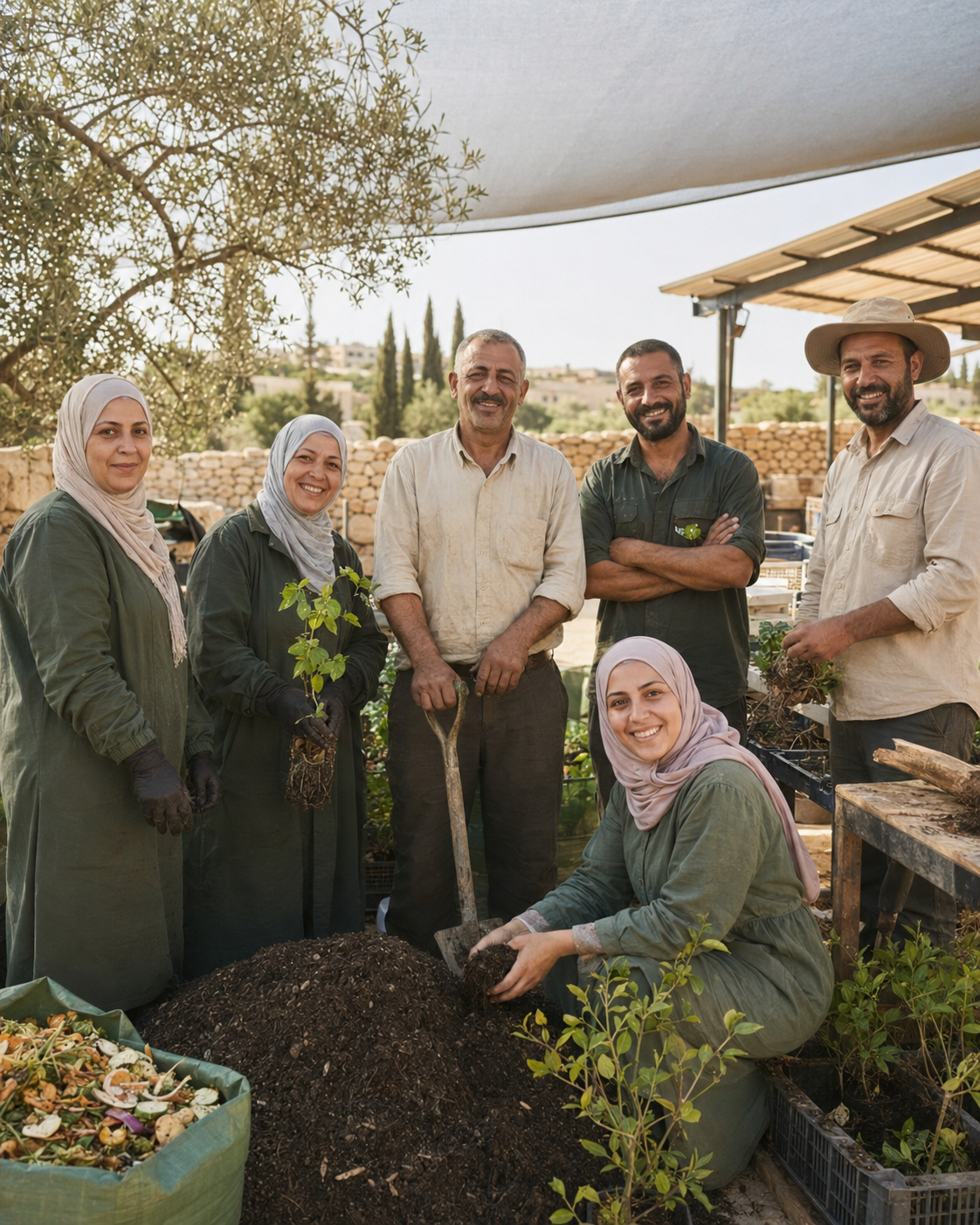
Our journey began with a simple but powerful idea: agricultural waste should not be treated as a problem, it should be treated as a resource.
Over the years, Al Aghsan and Al Karma Agricultural Cooperative has developed practical experience in organic fertilizer production, waste management, sustainable agriculture, and circular economy practices.
Our activities have expanded from the production of organic fertilizers to include vermicomposting, biochar, bokashi, compost tea, agricultural residues management, and capacity-building activities.
We continuously seek partnerships with research institutions, development organizations, farmers, cooperatives, and private-sector actors to develop solutions that are environmentally responsible, economically viable, and locally relevant.
Transform waste into valuable resources
To transform waste into valuable resources while supporting farmers, protecting the environment, improving soil health, and creating green employment opportunities for local communities.
A Greener Jordan Where Waste Becomes a Resource
We envision a Jordan where agricultural and organic waste is no longer viewed as an environmental burden but as a valuable resource that contributes to sustainable agriculture, healthier soils, economic growth, and resilient communities.
We aspire to become a leading local model for circular agriculture and organic resource recovery, demonstrating how innovative solutions can turn environmental challenges into opportunities for sustainable development.
Principles That Shape Our Work
Sustainability
We promote agricultural practices that protect natural resources and support the long-term health of our soil, water, and ecosystems.
Circular Economy
We believe in keeping resources in use for as long as possible. By converting agricultural and organic waste into useful products, we reduce waste and create value from materials that would otherwise be discarded.
Innovation
We continuously explore new technologies, techniques, and approaches that can improve organic waste management, fertilizer production, and sustainable agriculture.
Community Empowerment
We believe sustainable development starts with people. We create opportunities for local communities, farmers, women, youth, and vulnerable groups to gain knowledge, skills, and income opportunities.
Environmental Responsibility
We are committed to reducing pollution, improving waste management practices, and contributing to a cleaner and healthier environment.
Collaboration
We believe that meaningful change requires partnerships. We work with farmers, cooperatives, research institutions, government entities, NGOs, development partners, and private companies to build stronger and more sustainable solutions.
Our Work Is Guided by Several Key Goals
Reduce Agricultural and Organic Waste
To reduce the amount of agricultural residues and organic waste sent to disposal sites or improperly managed by transforming them into useful agricultural resources.
Improve Soil Health
To provide farmers with sustainable organic fertilizers and soil amendments that contribute to healthier soils and more productive agricultural systems.
Support Sustainable Farmers
To help farmers reduce their dependence on expensive chemical inputs and adopt more environmentally friendly and resource-efficient agricultural practices.
Create Green Jobs and Income Opportunities
To develop sustainable economic opportunities for local communities, particularly women, youth, and vulnerable groups, through green businesses and circular economy activities.
Promote Knowledge and Innovation
To increase awareness and build technical capacity in composting, vermicomposting, biochar, bokashi, organic agriculture, and sustainable waste management.
Strengthen the Circular Economy in Jordan
To contribute to a national transition toward a circular economy where waste is viewed as a resource and agricultural production is connected to sustainable resource recovery.
Expanding Our Circular Economy Model
In the coming years, Al Aghsan and Al Karma Agricultural Cooperative aims to expand its circular economy model and strengthen its role as a hub for sustainable agriculture and organic resource management.
Our future plans include:
- Expanding the production capacity of our organic fertilizer and soil amendment products.
- Developing new products from agricultural and organic waste.
- Scaling up biochar production and exploring its potential for soil improvement and climate action.
- Strengthening partnerships with farmers and agricultural cooperatives.
- Expanding training and awareness programs for communities, women, and youth.
- Developing stronger market linkages for sustainable agricultural products.
- Promoting research and innovation in circular agriculture.
- Creating additional green employment and income opportunities.
- Expanding our cooperation with research institutions and development partners.
- Building a stronger circular economy ecosystem connecting waste generators, farmers, producers, researchers, businesses, and communities.
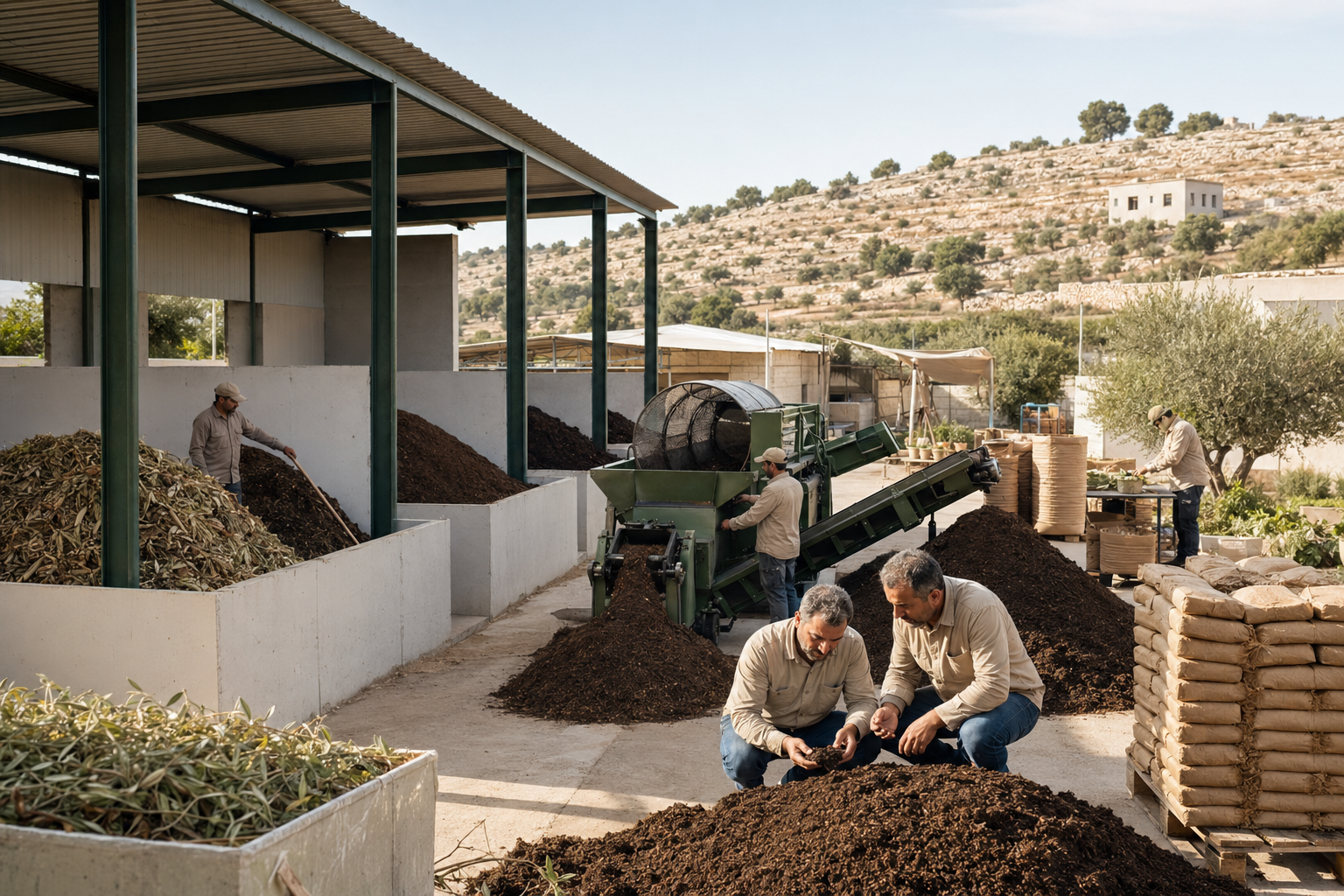
From local agricultural waste to national circular solutions.
We aim to demonstrate that sustainable agriculture can be both environmentally responsible and economically rewarding.